Featured

The Seven Summits and the Five Deeps: Some Anxieties About Prospective Deep-Oceanic Tourism

Five Deeps Expedition Aims to Dive to the Bottom of the ...

[Image description: A photo of the DSV Limiting Factor and its launch ship, the DSSV Pressure. The photo is taken about eye-level with the ocean as the Limiting Factor, a white, rectangular module is lowered by a mechanical arm into the sea. A person can be seen on the DSSV directing this process. End description.]

We finally have a submersible vehicle that can reach any point in the ocean, designed to last. It has already reached the bottom of the Challenger Deep four times, and the deepest points of all five oceans. This is where the project derives its name: The Five Deeps. Its progenitor, Victor Vescovo, funded it as part of his “Five Deeps Challenge.” But I wonder, should something this really be a challenge?

    This article is the most comprehensive I can find. The implications of this entire project are fascinating, and the DSV Limiting Factor has already greatly contributed to deep-ocean science. In a relatively short time, our maps of the ocean floor, especially the trenches (which the team has been working closely with) have been greatly improved and corrected. There have been several discoveries of new animal species, including one described as “an extraordinary gelatinous animal” with more certain to be on the way. Unlike the other two submersibles that have reached the bottom of the Challenger Deep, which only ever completed the feat once, this one was built to stick around.

    Victor Vescovo funded the project and owns the DSV Limiting Factor. A daredevil and thrill-seeker, he has reached all Seven Summits of the World, and both North and South poles. This is known as the “Grand Slam” of adventuring. Add the trenches, and he has now completed the nascent “Five Deeps” and “Four Corners” challenges. But is this something we should really be promoting? The article also proposes the idea of a company that provides tourism to the Challenger Deep for a high price tag. This has me worried. Extreme tourism has many issues. For example, in recent years, tourism to Mount Everest has come under fire. People die all the time on Mt. Everest because companies allow unqualified people – people with no mountaineering experience whatsoever – to summit the mountain with a team of guides. This puts both the lives of the tourists and the guides at risk, as well as the lives of rescue and body recovery teams necessary on such a highly trafficked mountain. Even experienced climbers can and often do die on the mountain. Vescovo is a retired naval officer. He has a degree of oceanic experience that many others do not share. Even so, he insisted on doing the first of the dives alone, against the advice of other people on the project and the collaborative spirit of science. How much experience would the guides that run these tours have? The tourists themselves? On Everest, people succumb to a mindset called “summit fever” that causes them to seek the summit even under changing weather and unfavorable conditions. Summit fever can be deadly. To launch the submersible, clear oceanic conditions are necessary. They are hard to come by. The dive is a six or seven hour round trip in a very small vehicle. Would these prospective Challenger Deep tourists be willing to listen if the dive had to be scrapped before or during the mission? What if someone gets claustrophobic halfway down?

I also wonder about the viability of such a piece of equipment being in the hands of a single person. Now that it’s been proven possible, I’m certain there will be work to build other reusable deep-ocean submersibles. Nonetheless, what happens when the DSV Limiting Factor is sold, as Vescovo plans to do? Will it be treated like a valuable piece of research equipment or a toy in the hands of its next buyer? What percentage of science should be about thrill-seeking and what percentage about discovery? To what extent can these attitudes coexist? I have no easy answers, just uneasy thoughts and tentative hopes for the new frontier of oceanic exploration posed by the development of the Limiting Factor.
Featured

Hurricane Sandy and Barnegat Bay, the Tale of an “Uneventful” Storm?

[Image description: A map of the coastline of New Jersey with Barnegat Bay highlighted in red. End description.]

Just about every person in New Jersey has a story about Hurricane Sandy. My family was lucky; I could tell you an uneventful tale about wandering around on my unexpected day off from school. Others weren’t so lucky, and went weeks without power or lost their homes. But if you asked the critters living off the coast of Barnegat Bay, they might not have much to tell you about the historic storm.

    A study headed by Rutgers University’s Gary Taghon found that eight months after Hurricane Sandy, communities of sea slugs, clams, and marine worms were largely unaffected by the storm. Sure, some species of crabs became more common, and a particular species of marine worm became less common, and the nitrogen concentration in the sediment was lower than usual. Nonetheless, this is not the usual effect of a hurricane on seafloor communities. How could a storm that wreaked havoc on the coast (costing $70 billion in damages) leave a bay almost entirely unscathed?

    Typically, a hurricane will affect seafloor communities through large amounts of rainfall. The rainfall, being comprised of freshwater, will alter the seawater’s composition and lower its overall salinity. If organisms that live in the area cannot tolerate a lower salinity, they die. The rainfall may also alter the composition of the seawater in such a way that oxygen is removed from its deepest parts, suffocating anything that lives there. Despite its incredible proximity to the origin of the storm, this was not observed in Barnegat Bay during or after Hurricane Sandy.

    The storm’s apparent lack of effect on seawater salinity and oxygen concentration may be due to its structure. Most estuaries receive a steady stream of freshwater from rivers. Barnegat Bay, in comparison, does not receive nearly as much freshwater. During the storm, this may have spared its inhabitants from the harm that a sudden influx of freshwater can cause to marine organisms.    This study is more comprehensive than the average study on the effect of hurricanes on the seafloor and its sediments. The data was collected as a part of a larger overall study on the Barnegat Bay. One major difficulty in studying the effects of hurricanes on the seafloor is having an accurate picture of the before when the after is readily apparent. Thankfully, data had been collected 3.5 months prior to the hurricane that was used to evaluate the effects eight months after the hurricane. While eight months does not give a clear picture of the immediate effect of the hurricane on the Barnegat Bay, it does demonstrate that there were very relatively little long-lasting effects on the bay and its inhabitants. It really goes to show you how complicated and varied the effects of storms can be. With some luck, more studies like this could be possible, and hurricanes better understood!

Featured

Amputations and Their Preventability

[Image description: A pale hand flipping a quarter off the thumb against a dark background. End description.]

I want you to flip a coin. A coin flip nearly represents the causes of limb amputation in the United States: 54% are due to vascular disease (diseases that affect the arteries and veins) and 45% are due to trauma, with the remaining 1% due to cancer. This begs the question, how many of these amputations are preventable?

In civilians, trauma-related amputations are usually the results of accidents, whether vehicular or workplace. The preventability of the accidents with specific focus on amputation is dubious. Focusing on obeying the rules of the road and strict compliance with workplace safety, and exercising good judgement would be advisable. Honing in on illness, the amount of possibly preventable amputations becomes startling. The most common cause of illness-related amputation in the United States is diabetes. Every year, about 73,000 Americans with diabetes undergo leg amputation. People with diabetes are at high risk of leg amputations because the disease can limit blood flow and damage their nerves so they lose sensation in their feet. Under these circumstances, injuries can easily go unnoticed until they become too infected to treat.   

With education and support, the rate of illness-related amputation can be reduced. Informing patients of the risks of their illnesses, and how to reduce these risks (such as closely examining their feet for injury each day, in the case of diabetic people) makes patients more well-equipped to care for their own health. This is not to say that the loss of a limb is a failure on the part of the people dealing with these illnesses, but it may represent a failure on the part of our healthcare system. Some problems are structural: the price of insulin, for example, is rising with a cost in human lives. Healthcare can be difficult to access, whether due to financial concerns or a lack of transportation. This is especially so for elderly people, who face a higher risk of vascular disease and a lack of support systems. But we as individuals and communities can do our part to help reduce the rate of illness-related amputations. If you are able to, check in on the people in your life who may be struggling with these illnesses. Can they get to and from appointments? Are they taking care of themselves? Could, for example, a carpool be organized? Could a club or group for people dealing with vascular illnesses be organized? Fundraising to help members of the community afford their medication? Having lost someone dear to me due to diabetes-related complications, I know it doesn’t have to be like this. We as individuals can only do so much, but never underestimate the power of a helping hand or a listening ear, or the power of community.

Horizontal Gene Transfer: Nearer Than You Think!

[Image description: A sketch from one of the notebooks of Charles Darwin. It is a simply drawn, branched figure, with parts labeled 1, A, B, C, and D. The top is captioned “I think” and there is some cursive writing underneath and to the right of the figure. End description.]

Good evening everyone! The topic of today is going to be horizontal gene transfer (HGT), which is the transfer and uptake of genetic information from one species to a different species through means that are not standard sexual reproduction! Today’s post is inspired by David Quammen’s The Tangled Tree: A Radical New History of Life. This is a book that I have and will be working closely with for class over the next two-odd weeks.

    Scientists at two universities, the University of Haifa and the University of Tel-Aviv, have developed a technique for discerning events of HGT between closely related strains of bacteria, which they have named Near HGT. It is much easier to detect HGT in distantly related groups because the genes and base sequences are very different from each other, but difficult when the groups are highly related. Much of the existing framework at the time of the article’s publication in 2015 was based in detecting HGT between distantly related strains. I imagine doing this  would be akin to finding spots of color mixed in on a monochrome background. In a sea of greens, it would be easier to find a spot of blue or yellow. With closely related species, it might be more like trying to distinguish crimson in a sea of reds.

    Using this technique, which involves examining both the order in which the genes are organized (synteny) and constant relative mutability (the rate at which a particular gene will develop and change over time, if my understanding is correct), these scientists hope to find and study more instances of closely-related HGT. In the process of doing, they hope to bring a greater understanding of HGT, its process, implications, and its effects on organisms. As The Tangled Tree discusses, HGT has had a profound effect not only on the actual process of evolution, but our human conception of evolution and heredity as well. Though I am not yet finished with the book, I find that it is very useful for contextualizing the science and its implications within the time period of its study. I have not seen as much discussion as I would like of current applications and implications of HGT. Thankfully, this article discusses at least one: antibiotics resistance. HGT is a primary mechanism by which antibiotics resistance occurs. With more focus on what they are calling “intra-clade” HGT (which is overlooked), a greater understanding of the transfer of antibiotics resistance may be achieved. Perhaps a little lofty, but maybe one day we’d be able to slow the spread of antibiotics resistance by molecular means. Has anyone ever considered using bacteria’s proclivity towards HGT as a weapon against itself?

(In this moment, I would like to profess my undying love for the NCBI and their publicly available research information. They really are the best.)

Hoping everyone is well and sending my best wishes.

4/6/2020: A brief correction, along with my apologies. I hyperlinked the wrong research article. The appropriate link should be in its place, and my praise of the NCBI should make more sense, haha.

The Principle of Gravity and Deep-Sea Migration

Hydrothermal Vent

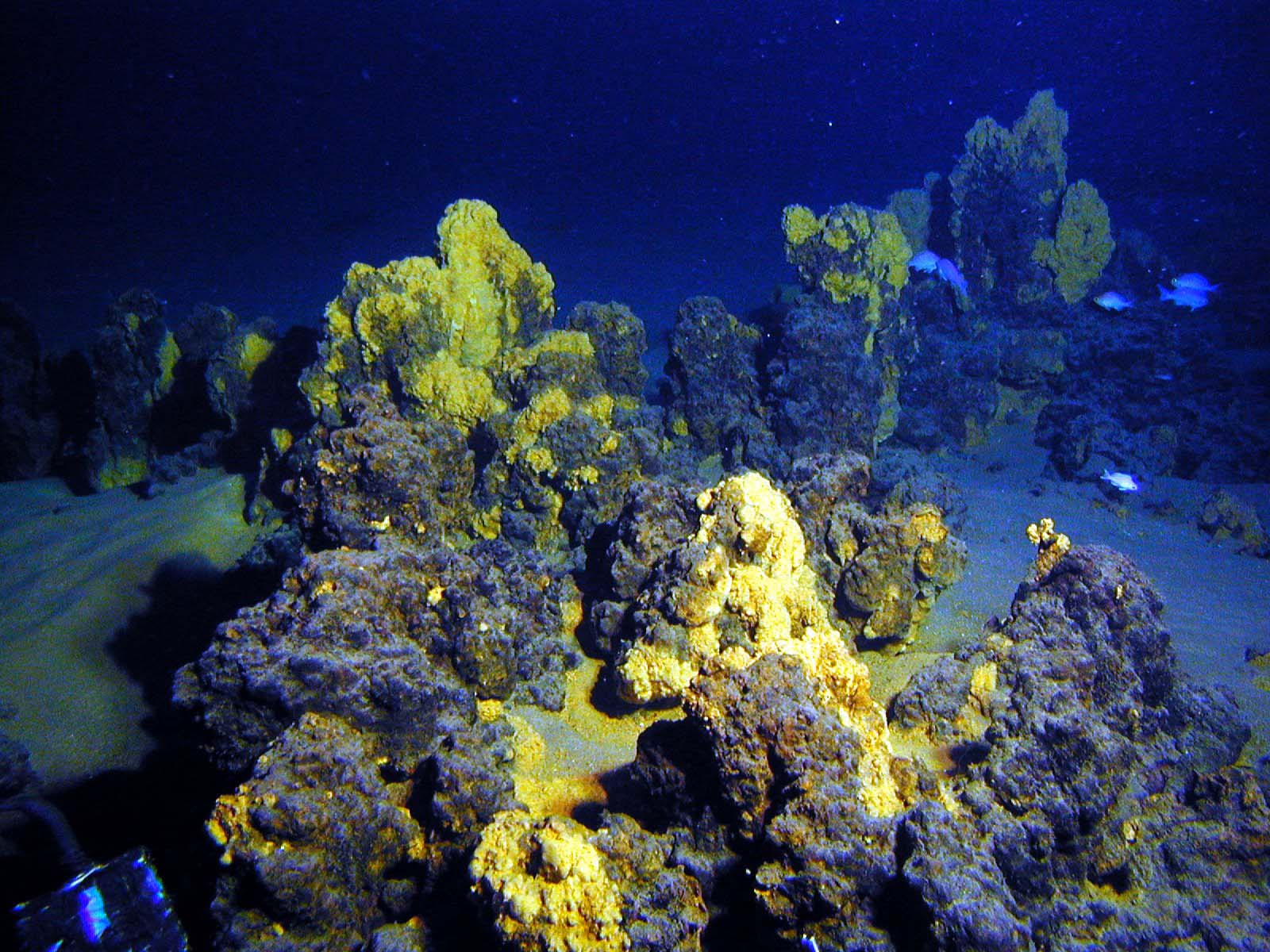
[Image description: A photo of a hydrothermal vent. The background is dark blue with several fish to the right of it. The vent itself appears to be a collection of rocks, bright yellow in some places. End description.]

Good evening, all! I hope everyone is well. Before I begin today, I’d just like to say that there will be no discussion of the coronavirus on this blog. The news is rapidly changing, and I don’t want to accidentally perpetuate misinformation. Unlike some people, including people with a lot of authority and absolutely none of it in science, I’m trying to be responsible about the information I share in this uncertain time. (Incidentally, please do not ingest chloroquine phosphate, or any other medication, unless it has been specifically prescribed to you. This includes the version of the medication intended for fish.)

    Having said that…

    Some exciting ocean news for everybody today! After nine years spent studying the deep sea off the coast of Angola, we now have evidence that there are communities of deep ocean fish that migrate! The data in this study was gathered using the Deep-ocean Environmental Long-term Observatory System (DELOS), created and maintained through the collaboration of various governments, universities, and industries. One purpose of DELOS is to broaden our understanding of the ocean so that human impact can be better understood, and acquisition of oil made safer for humans and the ocean. Using cameras, sensing equipment, and even satellites, researchers noticed that populations of fish would move with seasons. You may be wondering, “How does a fish almost 5,000 feet from the surface and any amount of sunlight know what season it is?” The answer is…nutrients!

    The basic principle of gravity, (what goes up must come down), also applies to the ocean. What happens up top – such as algal blooms, eventually drifts to the ocean floor. Because of the lack of sunlight, nutrients at the bottom of the ocean are generally and severely limited. Nutrient availability on the surface varies with the seasons because sunlight is the basis for the food chain. Sunlight feeds algae, algae feeds krill, krill feed fish, and so on. This study suggests that deep-ocean fish will follow sources of nutrients on top of the ocean, with a lag time. The lag time accounts for the amount of time it takes for nutrients from the top to reach the bottom of the ocean, which can take months. (The smallest of sediments and particles can take over fifty years to settle, according to my oceanography professor!) Without understanding the activity on top, the cause of the movement would otherwise be difficult to understand. This is important because it demonstrates that even 5000 feet down, deep-ocean life can still be affected by what occurs on the surface of the sea, months to years after the fact! DELOS is set to be a twenty-five year study, so who knows what else might come of this collaborative effort?

    You know, we used to think that nothing could live at the bottom of the ocean. Well, some of “we”, anyway. This was called the Azoic or Abyssus theory. It was proven wrong. We used to think that photosynthesis was the only way autotrophs (mainly plants) could exist – and plants form the basis of most food chains. Then deep-sea hydrothermal vents were discovered. With no light at all, the organisms surrounding them use chemosynthesis to survive. At every turn, the ocean surprises us. Life on Earth is an incredibly resilient, stubborn thing. You’re part of that great tradition of resilience, too. Don’t count yourself out just yet. There’s not a whole lot I alone can say to make this unprecedented situation less terrifying to live in. But I can tell you about the ocean, and the ocean has a lot to say about what we’re capable of, especially when we work together. Please take care.

Two Down, Many More To Go: Another Person Cured of HIV

HIV Awareness

[Image description: A red ribbon against a white background. End description.]

Before I begin today, I would like to send my best wishes out to everyone in these troubling, uncertain times. I hope you and your families are well. Remember to look out for one another. That said…Some good news!

    There has been an exciting development in the field of HIV research! A second person has now been designated “cured” of HIV, according to this article. In an interesting turn of events, the treatment he received was as a result of cancer. If I’m understanding correctly, this treatment was used as a form of symptom management to deal with particular risks of being HIV positive and having Hodgkin’s lymphoma, a cancer of the blood. The patient, Adam Castillejo, received a stem-cell transplant from a donor with an HIV-resistant mutation. Once transplanted, the donor’s resistant immune cells then replicate within the body, increasingly narrowing the amount of cells that can be infected with HIV. As of now, Adam Castillejo has been off of antiretroviral medication for more than two years and is symptom-free.

    While immensely hope-inspiring, it is important to realize that this is not a treatment for everyone with HIV. Stem-cell transplants are an intense treatment reserved as a last resort. Even for all of the pain and complications, failure is common. This treatment is also only used on HIV+ people with blood cancers, so it isn’t suitable for HIV+ people with other forms of cancer. If a person is responding well to antiretroviral treatment (and does not have cancer), the current form of this treatment would not be suitable for them.

The virus, though inactive and difficult to detect, is still at least partially present in Mr. Castillejo’s body. The Berlin Patient (the first to have been cured) has been HIV-free for thirteen years, and Mr. Castillejo for over two. This is not a guarantee that the HIV will not reoccur. Nonetheless, this is still a cause for celebration. Mr. Castillejo’s recovery is a point in favor of the reproducibility of the favorable treatment outcome first seen with the Berlin Patient, and while the current treatment is only available to a small group of people, this demonstrates the potential of gene therapy as a form of treatment and potential cure for HIV.


(A little more information on Adam Castillejo can be found here.)

Design a site like this with WordPress.com
Get started